The latest insight piece from PREO explores how battery circularity could reduce costs, improve reliability and unlock new opportunities for productive use of renewable energy across sub-Saharan Africa.
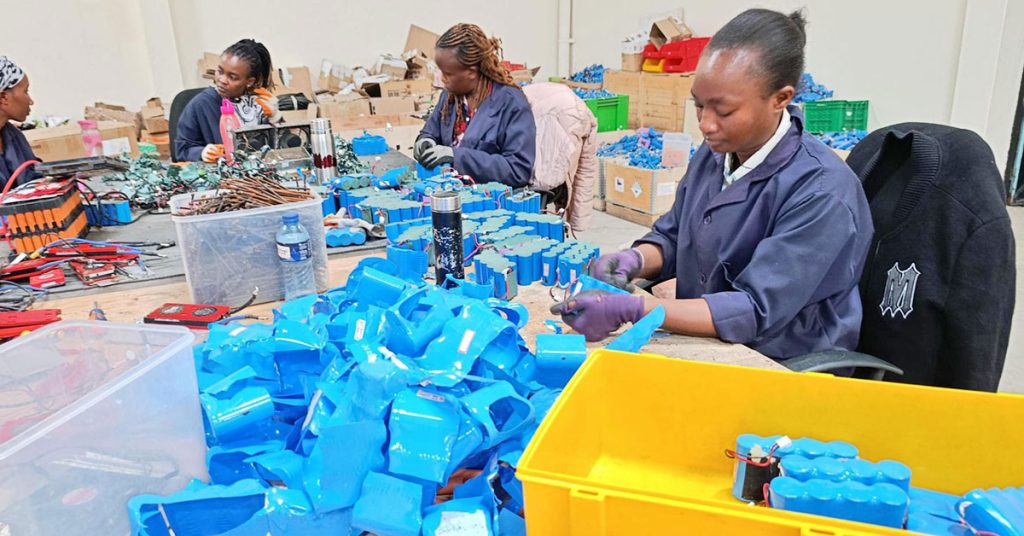
As productive use of renewable energy (PURE) markets continue to expand across sub-Saharan Africa, a new challenge is emerging: what happens to the batteries powering electric mobility, irrigation, cooling, agro-processing and other productive energy applications when they reach the end of their first life? Findings from PREO’s latest report, Second life batteries: Unlocking the next phase of productive energy scale, suggest the answer could play a significant role in determining the long-term affordability, resilience and sustainability of clean energy systems across the region.
The report argues that second-life batteries represent a largely untapped opportunity to retain valuable energy storage capacity within the system rather than losing it through premature disposal. While batteries may no longer meet the performance requirements of their original application, many retain significant usable capacity that can be repurposed for less demanding stationary energy storage uses. By extending battery lifespans and improving resource efficiency, second-life solutions could help lower costs, strengthen energy access and support the continued growth of productive energy markets.
Drawing on insights from seven companies supported through PREO, Energy Catalyst and EEP Africa, the report examines the commercial models, technical innovations and enabling market conditions required to scale battery reuse and repurposing across Africa. It highlights an emerging ecosystem of businesses working across battery testing, refurbishment, energy storage, Battery-as-a-Service and productive energy applications, demonstrating that circular battery value chains are already beginning to take shape.
A central finding of the report is that second-life batteries could help address several critical barriers facing productive energy enterprises. As demand for renewable energy-powered technologies grows, access to affordable and reliable battery storage remains a key constraint. Reusing batteries can reduce storage costs, improve asset utilisation and provide a pathway for managing the growing volume of batteries entering the market from electric mobility and other applications.
However, the report also stresses that scaling the sector will require more than technical innovation alone. Clear standards, stronger testing and grading systems, investment in collection and refurbishment infrastructure, and supportive policy frameworks will all be needed to build confidence in second-life battery applications and support market growth.
To mark the launch of the report, PREO hosted a webinar bringing together practitioners working at the forefront of battery reuse and circular economy innovation. The event featured five of the seven companies profiled in the report and provided participants with first-hand insights into the opportunities and challenges of building viable second-life battery businesses in African markets.
Speakers included representatives from AceleAfrica, Soleil Power, SLS Energy, Vittoria Technology and Inter Ethiopia Solutions PLC, with discussions spanning battery testing and grading, integrated first-life and second-life manufacturing, Battery-as-a-Service models, lease-to-own storage solutions and the integration of second-life batteries into income-generating productive energy systems.
The webinar underscored a broader message emerging from the report: as clean energy markets mature, attention must increasingly shift from deployment alone towards long-term system sustainability. Building circular value chains for batteries presents an opportunity not only to reduce waste, but also to improve the economics of productive energy technologies, expand access to affordable energy storage and strengthen the resilience of rural enterprises and communities.
At a time when productive use of renewable energy is being recognised as a critical driver of income generation, job creation and economic development, PREO’s latest report highlights how circular approaches to energy storage could become an important enabler of the sector’s next phase of growth. Rather than viewing end-of-life batteries as a waste challenge, the report positions them as a valuable resource capable of supporting a more affordable, resilient and sustainable energy future.
Readers can access the report and watch the webinar recording below:
Report: Second life batteries: Unlocking the next phase of productive energy scale
Webinar: