A journey powered by collaboration
As the need for sustainable and resilient energy grows, so too does the need for the people who can deliver it. Building a new generation of leaders, innovators and practitioners with the skills, expertise and networks to turn promising ideas into solutions at scale is essential to creating lasting global impact.
The UK government’s Transforming Energy Access (TEA) platform supports both innovation and capacity building across the energy access sector. A recent collaboration between the Chevening Transforming Energy Access Scholarship and Powering Renewable Energy Opportunities (PREO) demonstrates how these initiatives can work together to strengthen talent, foster connections and help address energy access challenges.
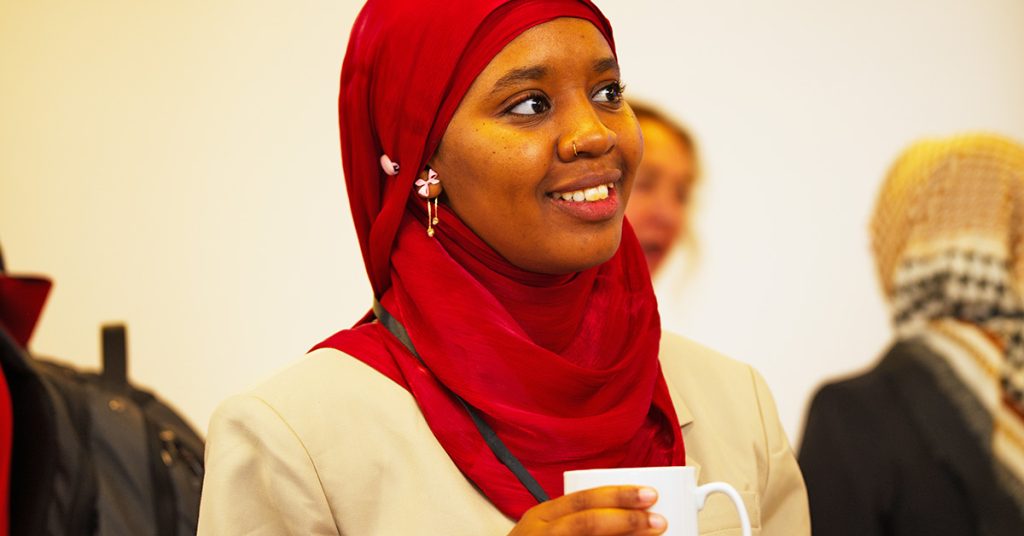
For Yagana Boukar Sanda, a Chevening TEA Scholar currently studying for an MSc in Humanitarian Engineering at the University of Warwick, that collaboration has opened the door to valuable industry experience with a company working to improve agricultural productivity and resilience through renewable energy solutions.
‘My interest in energy grew because of the close relationship it has with people’s livelihoods’, says Yagana. ‘Since reliable energy can help with agriculture, business activities, healthcare, education and a number of other essential operations, I think that developing more resilient energy systems can make an important contribution to improving livelihoods in West Africa, a region where communities are especially susceptible to climate, economic and humanitarian shocks.’
Connecting talent with opportunity.
As part of the TEA Chevening Scholarship programme, scholars are matched with experienced mentors from across the energy access ecosystem with the aim of connecting academics to key actors implementing solutions across key sectors such as transport, agriculture, healthcare and education. Yagana was paired with Mathieu Dalle, Director of Programmes and Advisory at Prosper Global’ Energy 4 Impact, who after regular discussion with Yagana recognised the strong alignment between her academic interests, technical expertise and the challenges being addressed by a PREO-funded innovator – Farm Warehouse.
‘Initiatives like this help bridge the gap between academic knowledge and practical experience’ says Mathieu. ‘They give talented people the opportunity to apply what they have learned in a real-world environment and better understand how impact is created on the ground.’
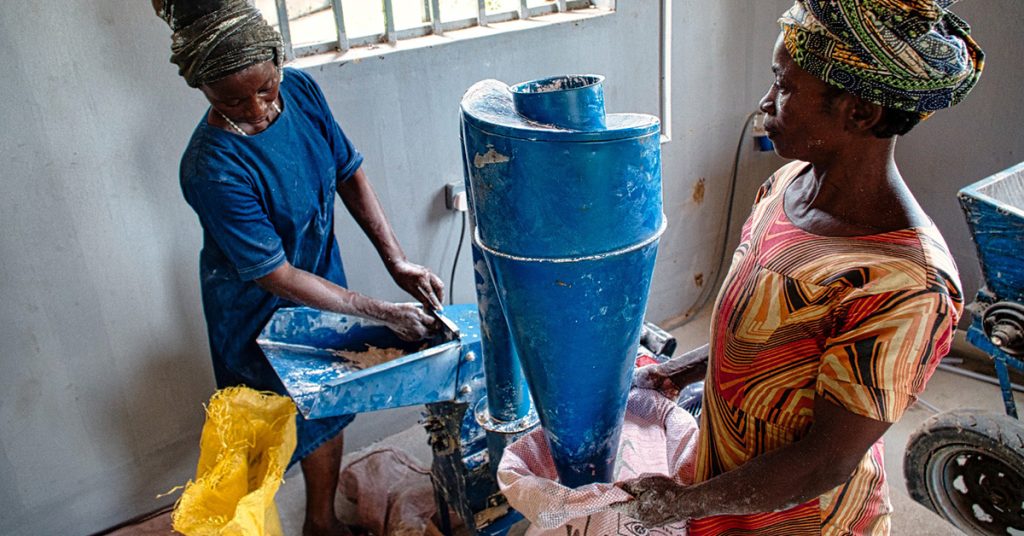
Farm Warehouse is an agricultural value-chain company focused on building more productive and prosperous farming communities in Nigeria. The company achieves this by bringing solar-powered processing and cold storage equipment closer to farms. This helps smallholder farmers and rural enterprises to increase productivity, reduce post-harvest losses and access new markets through Productive Use of Renewable Energy (PURE) technologies, warehousing services and digital market linkages.
Kuma Mede, Chief Executive Officer at Farm Warehouse says – ‘Our mission is to ensure that more of the value created through agriculture remains within the communities where that production happens. By improving access to productive infrastructure, clean energy technologies, and stronger market linkages, we want smallholder farmers and rural enterprises to increase productivity, reduce losses, earn more from their output, and build sustainable businesses.’
Turning knowledge into action
For many students, the transition from academic study to practical implementation can be challenging. Opportunities to work directly with innovative businesses provide invaluable insight into the realities of deploying energy solutions in diverse contexts.
The introduction by Mathieu created an opportunity for Yagana to apply skills from her background in mechatronics engineering (an interdisciplinary branch of engineering combining mechanical, electrical and computer software engineering to create and control smart automated systems) to directly support Farm Warehouse’s research and development efforts in making its solar-powered processing equipment smarter and easier to operate, particularly for users with limited technical literacy. ‘The goal is to improve machine usability, simplify operations, and ultimately make productive-use technologies more accessible to a wider group of processors and entrepreneurs.’ Says Kuma.
Yagana is also supporting Farm Warehouse’s capacity-building and technology-transfer teams to strengthen how operational knowledge is passed on to machine operators. This is especially important because a significant proportion of the company’s operators are women. ’By improving the way we train and support users, we believe more women can participate not only as machine operators, but also as processors, technicians, and managers. In that sense, her [Yagana’s] work contributes both to better technology adoption and to broader economic empowerment through entrepreneurship.’ added Kuma.
One of the biggest challenges Farm Warehouse experiences is that smallholder farmers often do the hardest part of the work from producing the crop, but capture only a small share of the value created afterwards. Limited access to affordable processing, storage, reliable energy, logistics, and markets means that these farmers lose significant value through post-harvest losses, high processing costs, poor market access, or weak bargaining power.
‘I want to focus on finding solutions which will make energy systems more reliable, sustainable and resilient, with a particular emphasis on the needs of communities and people whose livelihoods are vulnerable to climate and economic shocks’ says Yagana.’ I am especially interested in the area where energy, agriculture and technology come together, and in the way in which digital tools and capacity building can enable communities to obtain greater value from energy systems’.
Yagana is now applying her knowledge not only to support a business working at the forefront of PURE innovation, but one that directly contributes to: Sustainable Development Goal (SDG) 2: Zero Hunger, SDG 8: Decent Work and Economic Growth, SDG 9: Industry, Innovation and Infrastructure, SDG 7: Affordable and Clean Energy and SDG 12: Responsible Consumption and Production. ‘For me energy access is not just a matter of whether or not someone has electricity, since it also involves the different things that energy allows people to do – for example, running a business, processing agricultural products, accessing healthcare, preserving food or creating new economic opportunities.’
Looking ahead
As the global energy transition accelerates, expanding access to clean, reliable and affordable energy will depend on the people who bring them to life. Building a diverse pipeline of skilled professionals equipped to tackle technical, operational and social challenges is essential to creating lasting impact.
Yagana’s journey demonstrates the power of investing in people alongside innovation. Through connections forged across the UK Government’s Transforming Energy Access (TEA) platform, a scholarship opportunity became a pathway to hands-on experience, professional growth and meaningful contribution within the sector. In turn, Farm Warehouse gains access to fresh perspective, technical expertise and the potential needed to drive progress forward.
The collaboration between the Chevening TEA Scholarship, PREO, Farm Warehouse and Mathieu Dalle offers a scalable example of how strengthening connections across the energy access ecosystem can turn talent into action. For Yagana, the internship marks the next chapter in her professional journey. For the wider sector, it is a reminder that achieving universal energy access requires creating opportunities for people to learn, contribute and lead, ensuring the next generation of changemakers is equipped to deliver a more resilient, inclusive and sustainable energy future.
‘For me, mentorship provides three things that are often critical at the beginning of a professional journey: perspective, reality checks and connections’ Says Mathieu. ‘Many talented individuals already have the technical skills and motivation to make an impact. What mentorship can provide is the additional perspective, encouragement and challenge needed to translate promising ideas into concrete action’.
Chevening TEA Scholars at the Ayrton-Oxford Academic Symposium
We recently had the chance to catch up with Yagana at the Ayrton-Oxford Academic Symposium, an important and timely event from the Africa Oxford Initiative, the Foreign Commonwealth and Development Office, UK Research and Innovation, Transforming Energy Access Learning Partnership and the Carbon Trust. The event brought together leaders from academia, industry and government, highlighting the critical role of international research and innovation partnerships in accelerating clean energy transitions, expanding energy access and strengthening climate resilience. Take a look at Yagana’s interview below: