Rhiannon Turner,
PREO Programme Manager
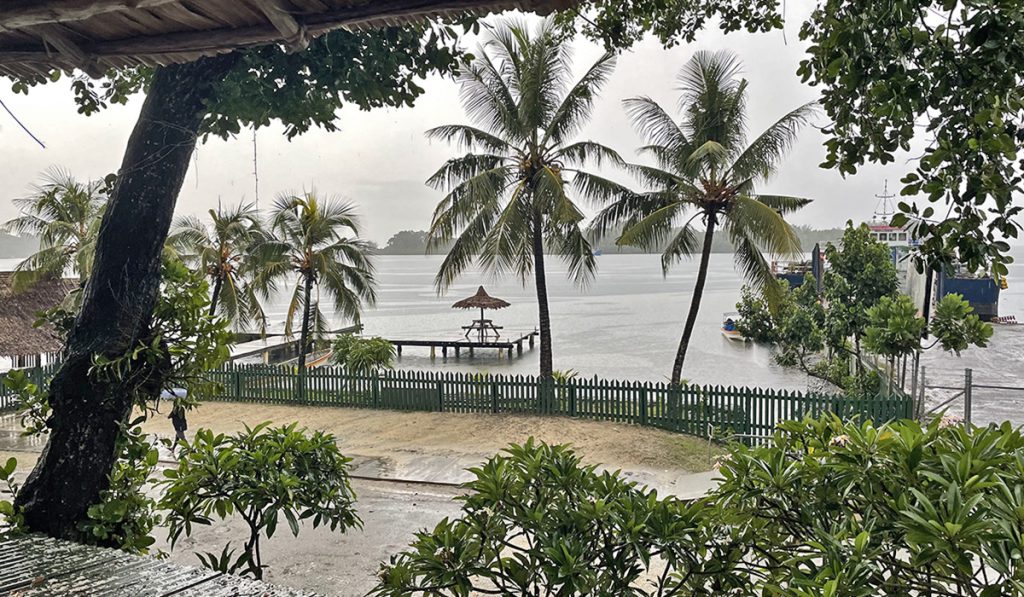
Late last year, I travelled across the Pacific Islands to visit several PREO-funded projects supported through grants since early 2025. While some challenges echo our work in sub-Saharan Africa, the Pacific Islands amplifies them: populations spread across vast ocean distances, inter-island travel measured in days rather than hours, and communities where relationships and cultural practice shape how – and whether – projects succeed. I wanted to understand what it truly takes to deliver meaningful lasting impact here.
Archipelago Energy in the Solomon Islands
Reaching Gizo – population 7,000 – required a small 16‑seat plane flying through a fierce thunderstorm, followed by refuelling from hand‑rolled barrels at Munda. The remoteness is impossible to ignore; Gizo feels worlds away from Honiara, the busy capital 250 miles across open water.
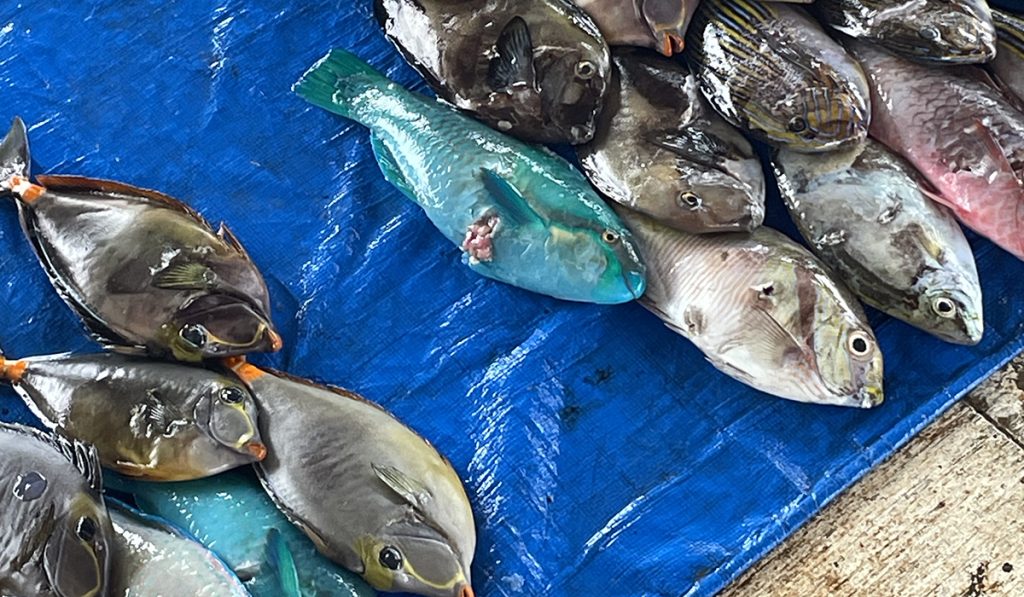
At Gizo’s fish market, I saw the problem clearly: without cooling, fish needs to be sold fast. Sometimes an ice block helps prolong stock perishability, but it is an inadequate makeshift measure.
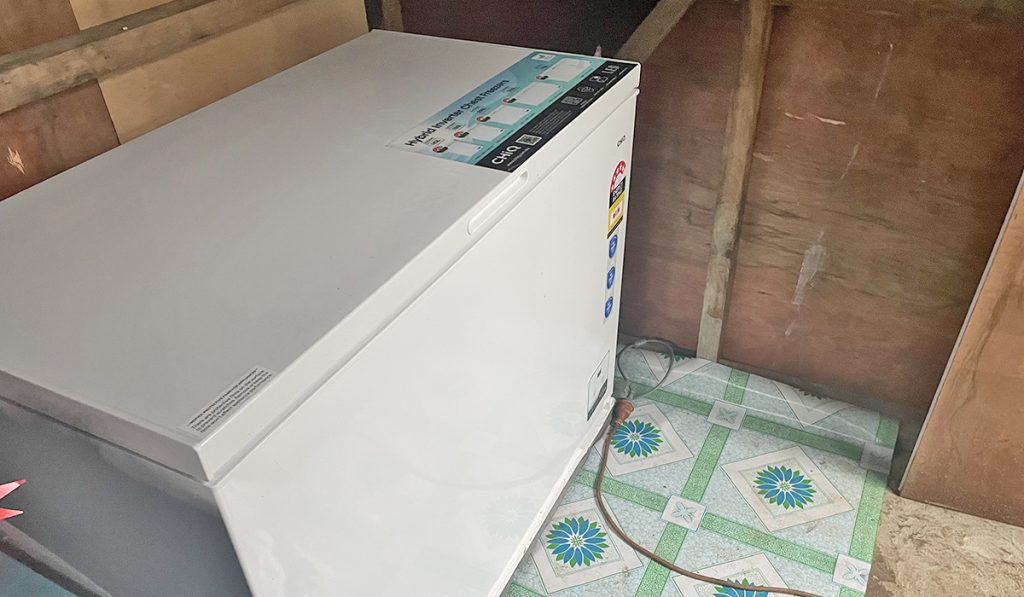
Archipelago’s “Hapi Fis” project provides solar freezers to local partners who commit to a minimum weekly catch. Fish is aggregated and transported 18 hours by boat to Honiara, where a market consisting of hotels, restaurants, and the diplomatic community is willing to pay far better prices resulting in higher income for the fishing community.
I was told by John Marsh, Director of Archipelago, that in time, and as the project develops, there may be further opportunities to improve the incomes and livelihoods of local fisher communities. For example, with new equipment, fish may be filleted and vacuum-packed at source rather than by those closest to market, keeping more of the value within the source region. Solar energy, coupled with Archipelago acting as the conduit to market, serves as the crucial link between remote fishers and paying customers. As we’ve seen in other PREO‑supported ventures like SokoFresh, linking producers to higher‑value buyers can transform livelihoods. Renewable energy is the enabler, but the business model is the bridge.
Technology that enters as a guest, not an intruder
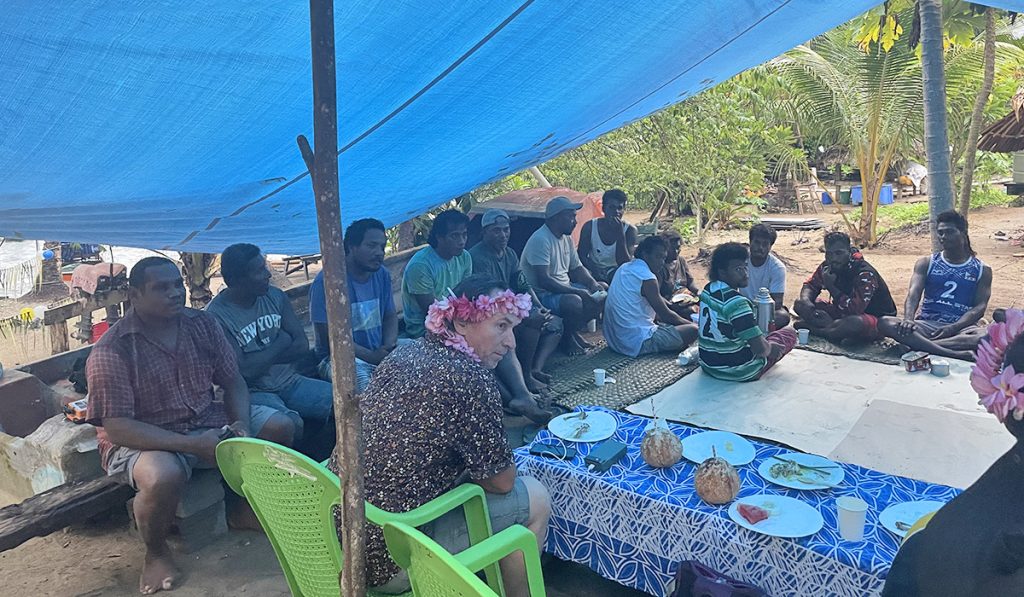
I took a boat to the project site, and as soon as I stepped onto the sand, I was greeted with a handmade frangipani garland and crown. There, I met Salome, the lead local partner for her community. There was a blessing ceremony for the new PREO equipment, prayers led by the minister, a meal prepared by the women of the village. The technology becomes part of the social fabric before it is even switched on.
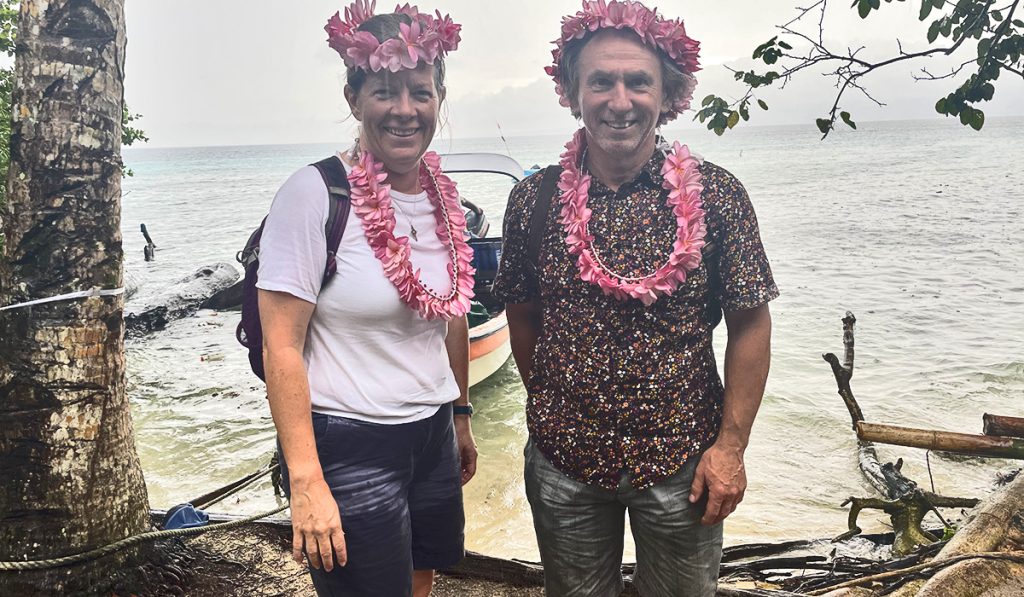
Moments like this underscore a crucial insight: in the Pacific, technology is not installed – it is invited. Social acceptance is part of the commissioning process. The hardware becomes woven into community life long before the first kilowatt is delivered.
Local Leadership as due diligence
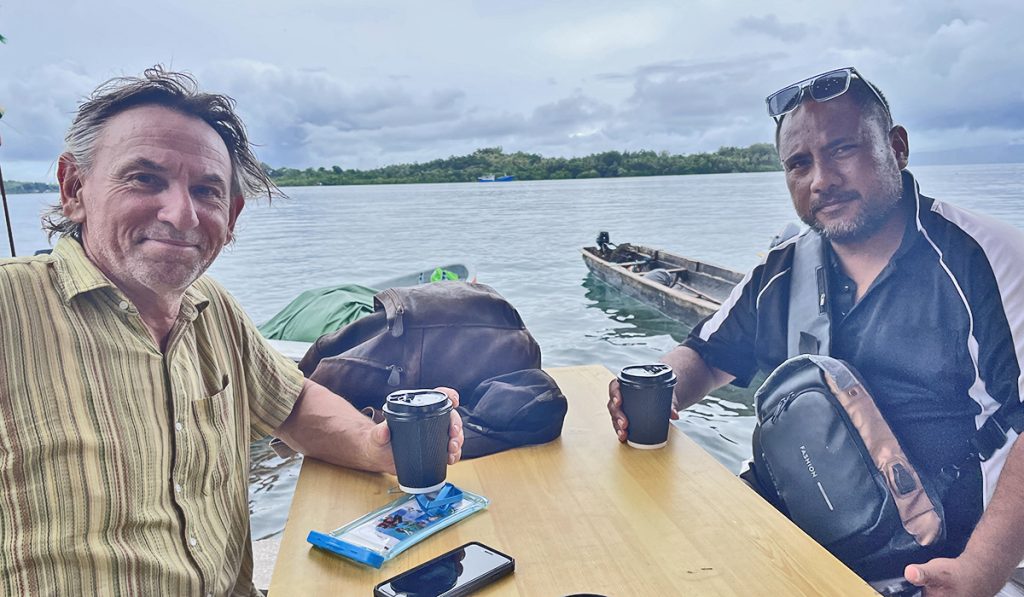
Selecting the right partners is central to impact, and in the Solomon Islands this begins with deep local connection. Archipelago’s Solomon Islands lead, Alex Kouru, has a deep network in Western Province through his extended family and community relationships. This grounding gives him an understanding of local priorities, dynamics, and cultural norms that no external assessment could match.
Because of this, partner selection isn’t a transactional process – it’s relational. Alex spends time with each prospective partner to understand their values, how benefits will be shared, and whether the project will strengthen the wider community. A trial period allows both sides to build trust before any equipment is installed. This is due diligence done through relationships, not spreadsheets.
These strong foundations create space for new opportunities. Once the solar freezers are installed, partners can use them not only for aggregated fish sales but also to store other goods, enabling small trading businesses to grow. Because the equipment is monitored via Starlink, partners can also sell data access, adding another income stream. Many are already asking when solar home systems might be available – a sign of rising aspirations as reliable energy becomes a bigger part of daily life.
Across the Solomon Islands, around 76% of people have some form of electricity access, but this headline figure masks huge disparities between Honiara and remote island communities. Power in outer islands is often unreliable and expensive, largely due to a heavy reliance on fossil‑fuel generation. As John Marsh notes, full, affordable electrification in these regions will require private‑sector models that can reach the last mile – and stay there.
Archipelago is already mapping expansion opportunities beyond fish cooling systems along the existing shipping route and exploring an electrified boat service that could collect fish while ferrying children to senior school in Gizo. Early modelling suggests electrified boats could cut operating costs by up to 50%.
If this model delivers as expected, it offers a powerful proof point: when renewable energy boosts the incomes of micro‑enterprises, households are better able – and more willing – to invest in clean energy for their homes. That virtuous cycle is exactly what PREO exists to catalyse.